Have you ever felt frustrated calling a company and being transferred from one agent to another? This negative experience can be minimized with effective customer service solutions. Customer service is a key differentiator, and understanding how call routing works can enhance your customers’ satisfaction.
Call routing technology is essential for optimizing telephone processes in businesses. In this article, you will discover its functionalities, benefits, and methods, as well as how to implement an effective system to improve your operations and increase efficiency.
You will also explore practical examples, common challenges, and how to overcome them, along with strategies to ensure your team is always ready to provide the best service. Let’s get started!
What Is Call Routing?
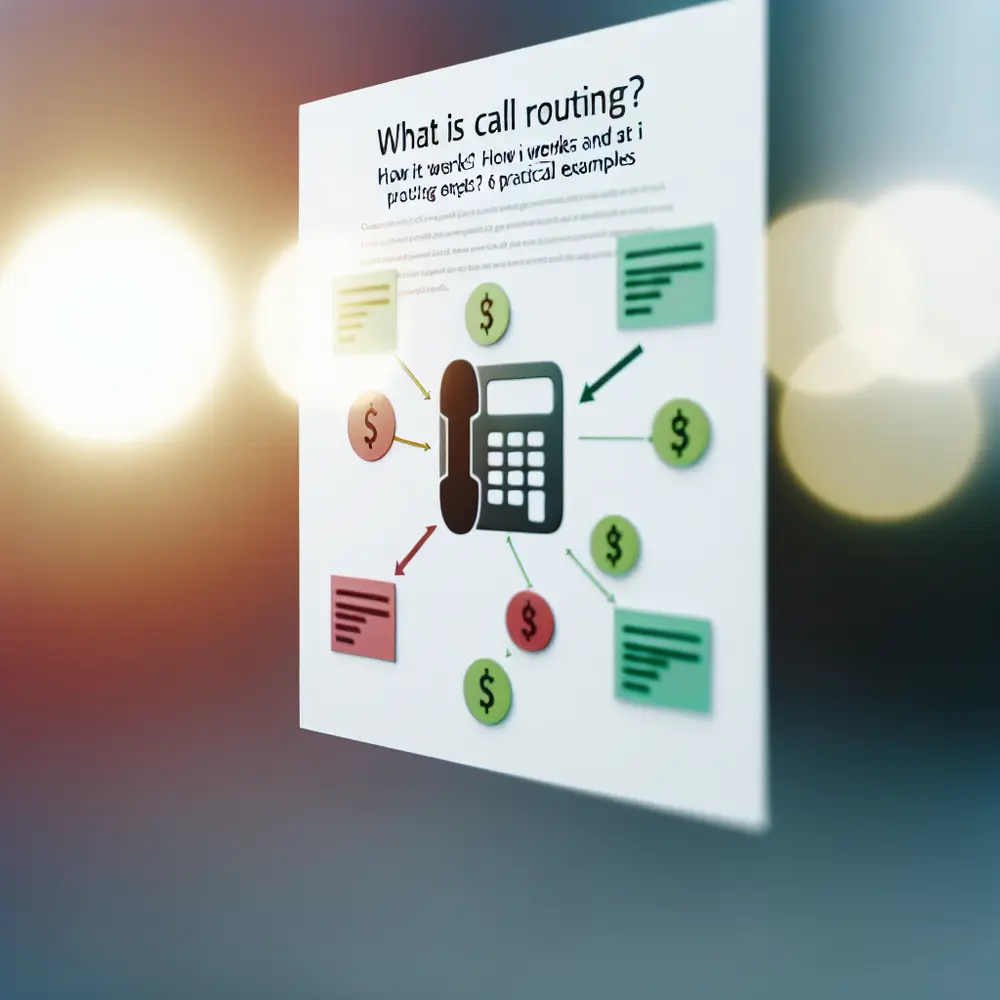
Call routing automatically directs telephone calls to the most appropriate agent or department within your organization. This practice stands out for enhancing telephone service and ensuring customer satisfaction.
At Vitalis Clinic, the adoption of call routing resulted in a 30% reduction in patient wait times and a 25% increase in satisfaction rates. This demonstrates how technology can transform service.
This tool plays a crucial role in corporate environments, especially in call centers. It uses algorithms to analyze criteria such as agent availability, the nature of the customer’s request, and interaction history.
By ensuring that calls reach those with the necessary expertise to resolve issues, service efficiency increases. This translates into a more positive perception of the company by the customer.
Additionally, call routing enables a personalized approach. With existing data, you can direct calls to a specific agent who has previously interacted with the customer, making the experience more humanized and increasing first-call resolution rates.
How Call Routing Works
The call routing system operates simply and effectively. It directs calls to the available and most suitable agents, increasing service efficiency. Thus, your requests are handled by qualified professionals, reducing wait times.
A practical example is Prime Transport. By implementing skills-based routing, calls for technical assistance are redirected to specialists, increasing service effectiveness by 40%. Check out our content on nexloo.
Proportional routing is another common method. It distributes calls according to agents’ workload, preventing overloads and ensuring more balanced service. This is especially valuable in call centers with high call volumes.
With IVR (Interactive Voice Response) technology, you can pre-filter calls. Customers make selections in an interactive menu, and calls are directed to the appropriate department. This not only improves flow but also facilitates quick resolutions for simple issues.
Moreover, an effective routing system enhances customer retention. When calls are handled accurately and promptly, the likelihood of customer loyalty increases, as they perceive superior service.
Benefits of Call Routing for Call Centers
Implementing call routing brings a wide range of benefits to your call centers. Among the main advantages is the reduction of customer wait times, resulting in more agile service. The ConteMix Accounting Office, for example, reduced its wait time by 20%, leading to a 35% increase in overall satisfaction.
With routing, you also improve workload management. If an agent is overloaded, calls are redirected, ensuring that everyone maintains good performance. This fosters a more balanced and collaborative atmosphere.
Another benefit is the collection of data on user behavior. With this information, you can adjust service strategies. If many customers approach the same topic, you can create content that addresses these queries more effectively.
In addition to improving customer experience, more agile service can increase your conversion rates. This results in more sales and a stronger relationship between the company and its customers, which is essential in a competitive environment.
Finally, by using a platform like Nexloo, you not only implement efficient routing solutions but also gain real-time monitoring and detailed reporting, empowering you to make data-driven decisions regarding your service performance.
Types of Call Routing
You can optimize customer experience using different types of call routing. One of the main methods is skills-based routing, which directs calls to agents with specific knowledge, increasing service efficiency. Check out our content on 12 Tips on How to Sell in Retail in 2023.
Queue-based routing is another approach. In this method, calls are organized in a waiting queue, allowing for orderly and prioritized service. This flow reduces customer wait times, improving team productivity.
Additionally, location-based routing considers the customer’s geolocation and connects them to a local agent, who can provide more relevant and contextual information, further enhancing the experience.
Advanced Routing Methods
Dynamic routing adjusts service based on real-time workload. This prevents overloads on certain agents, ensuring service quality. The application of this method was crucial for Global Call Center, which recorded a 15% reduction in call abandonment.
Multichannel routing, on the other hand, allows customers to interact through various channels, maintaining service continuity. Increasingly, consumers seek varied and instantaneous solutions, and integrating these methods is essential to meet current expectations.
Implementing Call Routing
To implement a call routing system, start by identifying your company’s specific needs. Map the call flow, understand demand, and the skills of your agents.
The Integral Health Clinic implemented the right technology and, as a result, improved its service rate by 50%, a crucial factor for the success of this approach. The Nexloo platform offers comprehensive tools that can adjust your routing according to industry best practices.
Additionally, ongoing training for your team is essential. Empowering agents to understand how the routing system works and its implications enables even higher-quality service.
By opting for a structured system, you acquire a valuable resource. Call routing not only enhances service but also ensures efficiency and better results in sales and customer satisfaction.
Common Challenges and How to Overcome Them in Call Routing
Although call routing is a powerful tool, it presents challenges. One of them is miscategorization of calls, which can negatively impact customer experience. A solution is to implement a pre-service system that filters calls through an interactive menu. Check out our content on 15 Tips to Increase Your Sales and Generate More Revenue.
Expresso Seguro faced agent overload during peak hours. The adoption of load balancing techniques integrated with predictive analytics to forecast high-demand periods improved the experience, reducing wait times by 30%.
Lack of integration between different platforms can hinder service efficiency. Investing in an integrated customer service platform, such as Nexloo, which unifies channels, is crucial to ensuring agents have access to the complete customer history.
Inadequate training for agents can create challenges. Promoting regular training with simulations helps equip agents with the necessary skills to handle various situations.
Lastly, underestimating data analysis can hinder identifying patterns and areas for improvement. Implementing dashboards that monitor performance in real-time helps maintain continuous adjustments in the routing process, always enhancing customer experience.
Practical Examples of Call Routing in Action
Several companies have achieved significant results with the implementation of call routing.
1. Skills-Based Routing
In a telecommunications agent, calls for technical support are directed to qualified professionals. This ensured a 50% increase in service efficiency.
2. Geographic Routing
Emergency services use geographic routing to connect customers to nearby agents, saving valuable time in critical situations.
3. Wait Time Routing
A call center that redirects calls from the financial sector to sales during peak hours managed to reduce wait times by 25%.
4. Intelligent Routing with AI
A company used an AI system to analyze behaviors and direct calls, improving customer satisfaction by 20%. Check out our content on 150+ Examples of Slogans That Work for Sales.
5. Flexible Routing for Peak Hours
During demand peaks, applying a call redistribution system among teams stood out in reducing wait times, ensuring agile and continuous service.
6. Priority Call Routing
In a financial institution, calls from VIP customers are promptly directed to managers, ensuring high-quality service.
The adoption of effective call routing practices transforms your service and fosters a more satisfying customer experience, promoting a better company image.
Conclusion and Next Steps
Call routing is a tool capable of transforming the telephone service experience in your company. Understanding how it works allows you to implement solutions that add efficiency and satisfaction for customers.
By adopting a routing system, you also collect valuable data on customer behavior, enabling personalization in interactions. This reflects in better results in sales and customer retention.
For managers, investing in modern routing solutions like the Nexloo platform is crucial. Considering tools that integrate with other service platforms maximizes the benefits you can obtain from this technology.
Next steps include exploring available options in the market and testing the Nexloo platform to meet your needs. By implementing effective software, you will not only be serving customers; you will be building lasting relationships and creating value.
Stay updated on best routing practices and seek innovations that enhance your operations. Invest in team training and the use of data to ensure a flawless customer journey.
Let’s sell and serve better together? Learn more about the Nexloo Customer Service Platform.