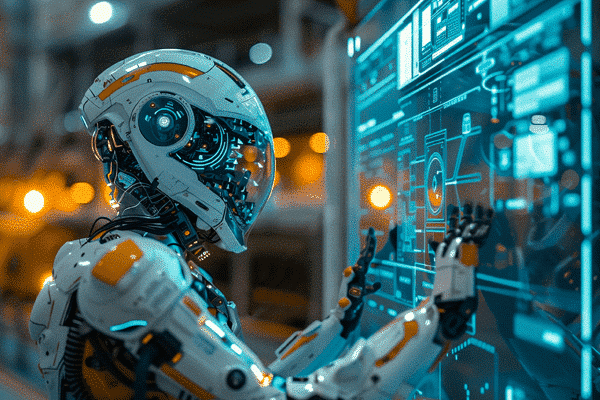
According to Statista, the AI market is expected to increase from $241.8 billion in 2023 to nearly $740 billion by 2030, with an annual growth rate of 17.3%. Artificial intelligence is expanding across various sectors, including healthcare, education, finance, media, and marketing. More companies are adopting this technology worldwide, driving an unprecedented digital transformation. But how can this expansion directly impact your business?
The AI Revolution in Healthcare
The healthcare sector has been one of the biggest beneficiaries of AI adoption. Technologies are revolutionizing diagnostics, treatments, and even hospital management. In Brazil, companies like Dr. TIS are using AI to improve the efficiency of medical consultations and diagnostics. The platform developed by the company employs advanced algorithms to analyze symptoms reported by patients and suggest possible diagnoses, speeding up the service process and reducing medical errors.
Another notable example is the Brazilian startup Laura, which developed an AI robot to monitor patients in real time. This system can identify signs of clinical deterioration before symptoms manifest, allowing for early intervention and saving lives. With the market’s growth, more solutions like these are expected to become commonplace, significantly improving the quality of healthcare.
AI adoption in healthcare is also helping to reduce operational costs. Automated processes and clinical decision support systems are decreasing the time needed for diagnosis and treatment, resulting in more efficient resource utilization. With the projected market growth, healthcare companies that invest in this technology will be better positioned to face future challenges and stand out in a competitive market.
Education Transformed by Artificial Intelligence
Education is another area undergoing significant transformation thanks to AI. Personalized learning tools are revolutionizing how students interact with educational content. In Brazil, Geekie is a pioneering company in this field, using AI to create personalized study plans that cater to each student’s individual needs. Geekie’s platform analyzes student performance in real time and adjusts content according to their difficulties and strengths.
Additionally, AI is being used to automate administrative tasks in educational institutions, freeing teachers to focus on teaching and supporting students. AI-based systems can manage enrollments, track student progress, and even predict which students may need additional help. This level of personalization and efficiency would be impossible without the use of artificial intelligence.
With the AI market projected to grow significantly, more educational institutions are expected to adopt these technologies to improve teaching quality and increase administrative efficiency. Personalizing learning and automating administrative processes not only enhances students’ educational experiences but also helps institutions operate more effectively and economically.
Innovation in the Financial Sector Through AI
!IA Nexloo
The financial sector has been one of the pioneers in adopting AI technologies. Banks and financial institutions are using AI for a wide range of applications, from risk analysis to fraud detection. In Brazil, Banco Bradesco implemented BIA, a virtual assistant that uses artificial intelligence to interact with customers and answer questions about banking services. This innovation not only enhances customer experience but also reduces the workload on human agents.
Another important application of AI in the financial sector is investment management. Platforms like Warren use AI algorithms to analyze the financial market and provide personalized investment recommendations to their users. These platforms can process large volumes of data in real time, identifying investment opportunities that might go unnoticed by human analysts.
AI is also helping to improve operational efficiency in the financial sector. Automated transaction processing and data analysis systems are reducing the time needed to conduct financial operations and minimizing errors. With the growth of the AI market, more financial institutions are expected to adopt these technologies to remain competitive and provide high-quality services to their clients.
Media and Marketing Driven by AI
The media and marketing industry is being radically transformed by AI. Data analysis tools and machine learning algorithms are enabling media companies to better understand their audiences and create more relevant and engaging content. In Brazil, Globo uses artificial intelligence to personalize content recommendations for its viewers, increasing engagement and audience satisfaction.
Additionally, AI is revolutionizing digital advertising. Platforms like Predicta use AI algorithms to analyze consumer behavior and create highly targeted advertising campaigns. This personalization allows companies to reach their target audience with greater precision, increasing campaign effectiveness and return on investment.
The automation of marketing processes is another significant benefit of AI. Marketing automation tools, such as RD Station, allow companies to manage marketing campaigns more efficiently, from content creation to performance analysis. With the AI market growing rapidly, companies that adopt these technologies will be better positioned to stand out in an increasingly competitive market.
!IA Nexloo
Brazilian Companies Adapting to AI Growth
Brazilian companies across various sectors are recognizing the importance of investing in AI to stay competitive. Natura, for instance, uses AI to optimize its supply chain, improving logistics efficiency and reducing costs. The company developed a system that utilizes AI algorithms to forecast product demand and adjust production accordingly, avoiding waste and ensuring that the right products are available at the right time.
Another Brazilian company embracing AI is Magazine Luiza, which uses artificial intelligence algorithms to enhance its customers’ online shopping experience. The company’s AI system analyzes customer buying behavior and offers personalized recommendations, increasing sales and improving customer satisfaction.
Embraer is also exploring AI’s potential to optimize its aircraft manufacturing and maintenance processes. The company is developing predictive maintenance systems that use AI to monitor aircraft performance in real time and predict when maintenance will be needed. This not only increases safety but also reduces operational costs.
The growth of the AI market presents a significant opportunity for Brazilian companies willing to invest in this technology. By adopting AI, these companies can improve operational efficiency, offer better products and services, and stand out in an increasingly competitive global market.
The Growth Opportunity
The AI market will grow by $740 billion by 2030, and companies that invest in this technology now will be better positioned to reap the benefits of this growth. Adoption can transform sectors such as healthcare, education, finance, media, and marketing, providing significant improvements in operational efficiency and customer satisfaction.
For entrepreneurs, company directors, and managers, the time to act is now. Investing in artificial intelligence is no longer an option but a necessity to remain competitive in the global market. Brazilian companies that are already adopting AI are reaping the rewards of this decision, and the trend is that more companies will follow suit.
By adopting AI, your company can not only improve efficiency and reduce costs but also create new opportunities for growth and innovation. With the projected growth of the AI market, companies that adapt quickly will be at the forefront of this technological revolution.
In a world where AI is becoming increasingly prevalent, being prepared for this change is crucial. Seize this opportunity to transform your business and position yourself as a leader in your sector. The future is promising for those willing to invest in artificial intelligence and harness its full potential.