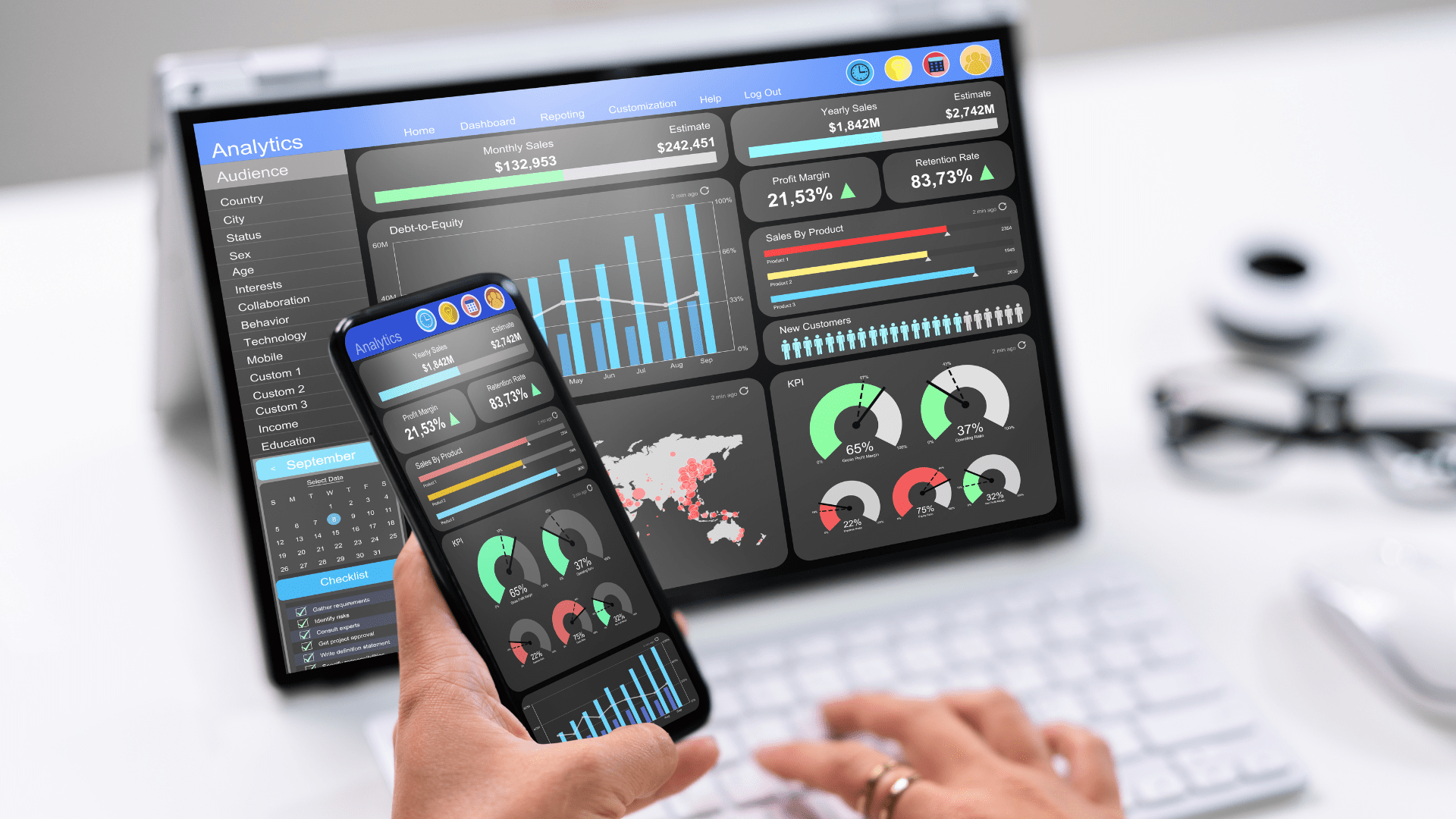
Marketing KPIs (Key Performance Indicators) are essential metrics for measuring and evaluating the performance of a company’s marketing strategies.
In this complete guide, we will explore what marketing KPIs are, their purposes, and how to implement them effectively in your campaigns.
What Are Marketing KPIs?
To understand the importance of marketing KPIs, we need to start with a clear definition and explore their purpose.
Definition
Marketing KPIs are specific metrics that help measure the performance of a company’s marketing strategies and activities.
They provide quantitative and qualitative data that allow you to evaluate whether marketing objectives are being met.
Types of KPIs
Marketing KPIs can be classified into different categories, such as:
- Campaign Performance KPIs: Measure the success of specific marketing campaigns.
- Engagement KPIs: Assess the level of user interaction with the brand’s content.
- Acquisition KPIs: Measure the effectiveness of strategies to attract new customers.
- Retention KPIs: Evaluate the ability to retain existing customers.
- Revenue KPIs: Measure the impact of marketing activities on sales and revenue.
What Are Marketing KPIs Used For?
Marketing KPIs serve various strategic and operational purposes within a company. Below are the main benefits and applications of these indicators.
Performance Measurement
KPIs allow you to measure the performance of marketing strategies in real-time, helping to identify what is working and what needs adjustment.
Decision-Making
By providing accurate and actionable data, KPIs assist in informed decision-making, allowing for strategic and tactical adjustments to improve results.
Goal Alignment
KPIs help align marketing goals with the overall objectives of the company, ensuring that everyone is working towards the same targets.
Opportunity Identification
Analyzing KPIs can reveal new market opportunities, emerging trends, and growth areas that can be explored.
Resource Optimization
By measuring the effectiveness of different marketing activities, KPIs allow for more efficient resource allocation, focusing on strategies that generate higher returns.
Complete Guide to Implementing Marketing KPIs
Implementing marketing KPIs effectively involves several strategic steps. Below, we provide a step-by-step guide to help you define and utilize marketing KPIs in your campaigns.
1. Define Your Marketing Goals
The first step in implementing marketing KPIs is to clearly define the goals you want to achieve. These goals should be Specific, Measurable, Achievable, Relevant, and Time-bound (SMART).
- Examples of Goals:
- Increase website traffic by 30% in the next six months.
- Generate 500 qualified leads per month.
- Increase sales conversion rate by 15% by the end of the year.
2. Choose Relevant KPIs
Based on the defined goals, select KPIs that best measure the success of those objectives. Ensure that each KPI is directly related to a specific goal.
- Examples of KPIs:
- Website Traffic: Number of visits to the website.
- Conversion Rate: Percentage of visitors who complete a desired action (like making a purchase or filling out a form).
- Cost per Lead (CPL): Average cost to acquire a new lead.
- Return on Investment (ROI): Revenue generated from marketing campaigns relative to the total cost.
3. Data Collection
Use analytics and data collection tools to monitor the selected KPIs. Tools like Google Analytics, HubSpot, SEMrush, and CRM platforms are essential for obtaining accurate data.
- Tool Setup: Configure your analytics tools to track the defined KPIs.
- System Integration: Ensure your marketing, sales, and CRM platforms are integrated to provide a comprehensive view of performance.
4. Data Analysis
Analyze the collected data to evaluate the performance of your marketing strategies. Look for patterns, trends, and insights that can help improve your campaigns.
- Dashboards and Reports: Create custom dashboards and regular reports to track KPIs.
- Period Comparison: Compare data from different periods to identify changes in performance.
5. Strategy Adjustment
Based on the KPI analysis, adjust your marketing strategies to optimize performance. This may include restructuring campaigns, altering budgets, or implementing new tactics.
- A/B Testing: Conduct A/B tests to identify which changes have the greatest impact on KPIs.
- Continuous Feedback: Gather ongoing feedback from your team and customers to refine your approaches.
6. Communication and Alignment
Ensure that all stakeholders are aware of the KPIs and the results of the campaigns. This promotes alignment and collaboration around marketing objectives.
- Regular Meetings: Hold regular meetings to discuss KPI performance and actions to be taken.
- Transparency: Maintain transparency about results and challenges faced.
7. Continuous Improvement
Monitoring and analyzing marketing KPIs should be an ongoing process. Regularly review and adjust your strategies based on the latest data.
- Constant Iteration: Always be willing to adjust and improve your campaigns based on insights gained.
- Goal Updates: Update your goals and KPIs as necessary to reflect changes in the market and company objectives.
Examples of Marketing KPIs
To illustrate how marketing KPIs can be applied in practice, here are some specific examples of KPIs for different areas of marketing.
Campaign Performance KPIs
- Click-Through Rate (CTR): Percentage of people who click on a link or ad relative to the total number of views.
- Conversion Rate: Percentage of visitors who complete a desired action (purchase, sign-up, etc.).
- Cost per Acquisition (CPA): Average cost to acquire a new customer through a specific campaign.
Engagement KPIs
- Engagement Rate: Level of user interaction with the content (likes, shares, comments).
- Average Time on Site: Average time visitors spend on the site.
- Bounce Rate: Percentage of visitors who leave the site after viewing only one page.
Acquisition KPIs
- Organic Traffic: Number of visitors arriving at the site through unpaid search results.
- Paid Traffic: Number of visitors arriving at the site through paid ads.
- New Leads: Number of new leads generated in a specific period.
Retention KPIs
- Retention Rate: Percentage of customers who continue to do business with the company after a specific period.
- Churn Rate: Percentage of customers who stop using the company’s products or services.
- Customer Lifetime Value (CLV): Total expected value a customer will bring to the company during their relationship.
Revenue KPIs
- Total Revenue: Total value of sales generated by marketing campaigns.
- Return on Investment (ROI): Revenue generated relative to the total cost of marketing campaigns.
- Profit Margin: Percentage of profit relative to total revenue.
Tools for Monitoring Marketing KPIs
Choosing the right tools is crucial for effectively monitoring and analyzing marketing KPIs. Here are some of the best tools available in the market.
1. Google Analytics
Google Analytics is a powerful and widely used tool for monitoring website traffic and other related KPIs.
- Features: Traffic analysis, conversion tracking, custom reporting.
- Benefits: Free, easy integration with other Google tools, detailed insights.
2. HubSpot
HubSpot is an inbound marketing platform that offers a wide range of tools for monitoring KPIs.
- Features: Marketing automation, CRM, performance analysis, detailed reporting.
- Benefits: Intuitive interface, integration with various tools, robust free version.
3. SEMrush
SEMrush is a comprehensive SEO and digital marketing tool that helps monitor campaign performance KPIs.
- Features: Keyword analysis, traffic monitoring, competitor analysis.
- Benefits: In-depth SEO insights, detailed reports, user-friendly.
4. Marketo
Marketo is a marketing automation platform that helps monitor marketing campaign KPIs.
- Features: Campaign automation, performance analysis, lead segmentation.
- Benefits: Advanced automation features, CRM integration, detailed reporting.
5. Salesforce
Salesforce is a robust CRM platform that offers marketing analytics tools to monitor KPIs.
- Features: Sales management, marketing automation, performance analysis.
- Benefits: High scalability, integration with various tools, strong customization capabilities.
6. Tableau
Tableau is a data visualization tool that helps create dashboards and custom reports for KPI monitoring.
- Features: Data visualization, dashboard creation, performance analysis.
- Benefits: Interactive visualizations, integration with various data sources, easy to use.
7. Google Data Studio
Google Data Studio is a free data visualization tool that allows you to create custom reports and dashboards.
- Features: Custom reports, integration with Google Analytics and other Google tools.
- Benefits: Free, easy to use, integrates well with other Google tools.
8. Mailchimp
Mailchimp is an email marketing platform that offers tools to monitor email campaign KPIs.
- Features: Email automation, campaign analysis, detailed reporting.
- Benefits: Intuitive interface, integration with various tools, free version available.
9. Hootsuite
Hootsuite is a social media management platform that helps monitor engagement KPIs on social networks.
- Features: Post scheduling, engagement monitoring, performance analysis.
- Benefits: Supports multiple social networks, detailed reports, easy to use.
10. Hotjar
Hotjar is a user behavior analysis tool that helps monitor engagement KPIs on your site.
- Features: Heatmaps, session recordings, feedback surveys.
- Benefits: Detailed insights into user behavior, easy to implement, visual reports.
Nexloo: The Complete Tool for Monitoring Marketing KPIs
When it comes to choosing the best tool for monitoring marketing KPIs, Nexloo stands out as a complete and efficient option.
Let’s explore what makes Nexloo ideal for companies looking for an integrated and effective solution.
Advanced Features
Nexloo offers a wide range of advanced features that cover all monitoring and analysis needs for marketing KPIs, from marketing automation to data analysis.
Integration and Scalability
Nexloo easily integrates with other tools and systems, ensuring a smooth and efficient implementation.
Additionally, the platform is highly scalable, able to grow alongside your business and adapt to new challenges.
Customer Support
Nexloo is known for its excellent customer support, providing personalized and ongoing assistance to ensure your company gets the most benefit from the tool.
Customizable Reports and Dashboards
Nexloo’s reports and dashboards are highly customizable, allowing your company to monitor performance across various areas and make data-driven decisions.
Cost-Effectiveness
Nexloo offers excellent cost-effectiveness, providing a robust and comprehensive solution at a competitive price.
This results in a high return on investment by improving operational efficiency and customer satisfaction.
In summary, Nexloo stands out as the best choice for companies seeking an integrated solution to monitor and analyze marketing KPIs.
With advanced features, easy integration, excellent customer support, and great cost-effectiveness, Nexloo provides everything your company needs to transform its marketing operations and achieve new levels of success.
I hope this complete guide has provided a clear and detailed overview of marketing KPIs, their importance, how to implement them, and the best tools to monitor them. Nexloo, in particular, represents the best choice for companies looking for a comprehensive and effective solution to optimize their marketing strategies and generate exceptional results.