Do you face challenges in managing customers in your fashion company? You know that customer loyalty is crucial for your business success, but you don’t know where to start? Implementing a CRM might be the solution you need. This technology transforms the way you interact with your customers, optimizing processes and increasing satisfaction. In this article, you will discover how CRM can boost your sales and improve your relationship with consumers.
A solid customer management strategy is essential in such a competitive market. Would you like to access valuable data that can aid in market segmentation and trend forecasting? With the right CRM software, you not only record interactions but also analyze information that underpins strategic decisions. These tools become allies in optimizing your sales and creating lasting relationships.
Let’s sell and serve better together? The automation of processes is within your reach with the right CRM choice. You can save time on sending emails, reminders, and managing promotional campaigns. This ensures more efficiency for your team and a smoother experience for customers. Managing loyalty and promotions also becomes straightforward, helping your company increase revenue and solidify its market position.
Introduction to CRM for Fashion Companies
CRM for fashion companies is an essential tool to optimize customer management and drive sales. By using a CRM system, you can manage interactions with customers efficiently, improve service, and consequently increase satisfaction and consumer loyalty. This technology transforms communication, allowing for personalized approaches and strategies focused on customer needs.
“With the implementation of CRM, we increased our customer satisfaction and improved our operational efficiency.” – Sales Manager, Fashion XYZ
With a specific CRM software for fashion companies, you gain a comprehensive view of the customer journey. This system allows for recording interactions, tracking leads, and analyzing valuable data that informs strategic decisions. With this information at hand, you not only understand sales better but also identify market trends.
Moreover, adopting a CRM gives you a powerful tool for sales optimization. This software automates processes such as sending marketing emails, follow-up reminders, and managing promotional campaigns. This automation not only saves time for your sales team but also provides a smoother experience for customers.
Enrolling customers in loyalty programs and promotions is facilitated with customer management in fashion companies. This not only helps retain customers but also fosters longer-lasting relationships, which are vital in such a competitive sector. By offering continuous value, you can increase revenue and solidify your position in the market.
Therefore, CRM is more than just a solution for customer management; it is a comprehensive strategy that fosters growth and innovation. With a smart investment in technology, you create more efficient operations, significant achievements, and effective relationships with your consumers. Thus, considering a CRM is a vital step for anyone looking to thrive in this sector.
The Need for Efficient Customer Management
Customer management is fundamental for fashion companies facing a competitive market. Implementing a CRM allows you to collect, analyze, and use customer data effectively, strengthening relationships with them. This management enables personalized service, increasing satisfaction and customer loyalty.
“The integration of CRM allowed us to segment our customers effectively, enhancing our marketing efforts.” – Marketing Director, ABC Fashion Company
- Segmentation of clients based on purchase behavior.
- Personalized marketing campaigns leading to better conversion rates.
- Improved customer retention through tailored loyalty programs.
Integrating software facilitates segmentation of customers, enhancing targeted marketing actions. These personalized approaches help you better understand buying preferences, behaviors, and trends, which are essential for optimizing your sales. With organized and accessible information, you can make more accurate and strategic decisions.
Automation of processes is another advantage of CRM. With this software, tasks such as follow-ups and sending marketing emails can be executed automatically. This not only saves time but also reduces errors, allowing the team to focus on more creative and strategic activities.
Centralizing information is a positive aspect. With all interactions recorded in one place, your team will have access to a complete history that facilitates service and decision-making. This comprehensive view allows you to identify sales opportunities and market trends, creating a continuous cycle of improvements.
Thus, an effective CRM is not just convenient; it is a strategic necessity to stand out in the fashion sector. By optimizing customer management, you can enhance your relationship with the audience and increase operational efficiency and sales. Therefore, implementing a CRM is a fundamental step for success in our market.
Benefits of Using CRM in Fashion Companies
Implementing a CRM brings a series of benefits capable of transforming customer management and optimizing business operations. Firstly, these systems organize crucial information centrally, facilitating access and informed decision-making. All team members can view the history of interactions, preferences, and purchasing behaviors, increasing personalization in service. Check out our content on crm. Check out our content on crm.
“The automation allowed us to reduce repetitive tasks and focus on qualified leads.” – Salesperson, Profitable Fashion
- Automation of sales and marketing processes.
- Data analysis through detailed reports.
- Customer segmentation for targeted campaigns.
Additionally, by using this software, you can automate sales and marketing processes. This results in more efficient campaigns and allows the sales team to focus on qualified leads. Automation reduces repetitive tasks, enabling professionals to engage strategically. Thus, sales optimization gains prominence, improving conversion rates and consequently revenues.
Data analysis is a valuable feature of a CRM. With detailed reports, you can identify market trends, evaluate product performance, and discover which sales channels yield the best results. This intelligence is vital for making quick and assertive decisions, optimizing your commercial strategies.
Another benefit is customer segmentation. CRMs allow you to create groups based on specific criteria, such as purchasing behaviors. Targeted campaigns become more effective, directly impacting loyalty. When you understand and better meet customer needs, you prepare to outperform the competition.
Integrated CRM systems, such as CRM for WhatsApp, offer direct and efficient communication with customers. This synergy between potential channels promotes agility in service and helps build lasting relationships. Investing in CRM is not just a smart financial decision, but a clear strategy to stand out in a dynamic market.
Factors to Consider When Choosing a CRM for Your Fashion Company
Choosing a CRM should be based on characteristics that meet the needs of the fashion segment. The scalability of the software is crucial. A system that keeps pace with company growth ensures that resources become increasingly effective. Investing in a flexible solution avoids additional costs in the future.
- Integration with other management tools.
- Intuitive and easy-to-learn interface.
- Customization that meets specific sector demands.
Integration with other management tools used, such as e-commerce platforms or accounting software, is also important. Compatibility between systems provides smoother management, reducing rework and optimizing internal communication. Connection with automation systems, such as CRM for WhatsApp, enhances engagement and sales.
The software interface cannot be overlooked. An intuitive system facilitates adoption and team training, improving efficiency in sales optimization. A lower learning curve allows employees to use the tools effectively from the start, maximizing the return on investment.
“Our team quickly adapted to the new system, which was essential for the success of the implementation.” – IT Supervisor, Modern Fashion
Customization is a differential to consider. A CRM that allows for customizations meets the specific demands of the fashion segment, enabling a closer relationship with customers. This is essential as it provides a more pleasant shopping experience tailored to consumer preferences.
Finally, it’s crucial to consider the technical support and assistance offered by the vendor. Prompt support minimizes downtime and contributes to continuous operation. Thus, choosing software that provides active support helps ensure that the system’s use yields the necessary results, being an ally in your business strategy.
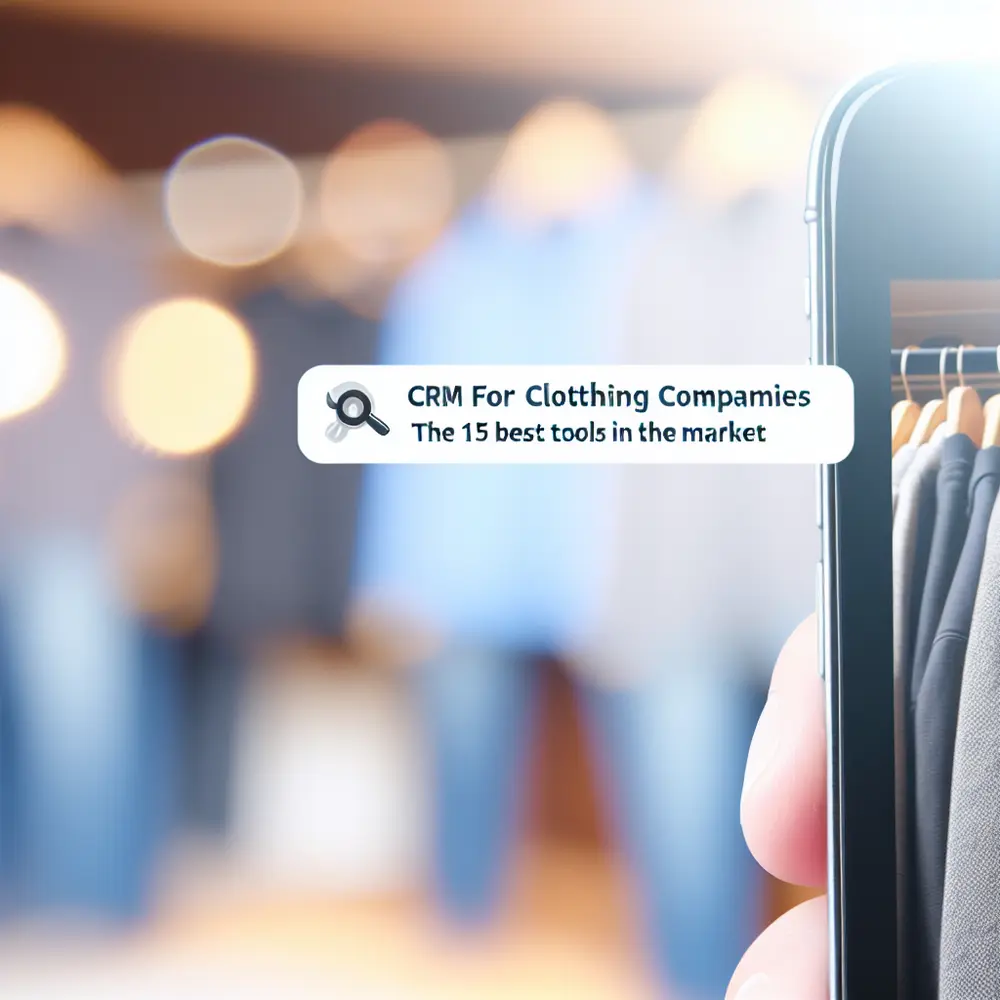
The 15 Best CRMs for Fashion Companies on the Market
When thinking about customer management, choosing the right CRM can be the key to success. These tools enhance customer relationships, optimize sales, and simplify data management. Below is a selection of the 15 best tools available on the market.
1. Salesforce
Salesforce is one of the most recognized CRMs in the world. It offers customized solutions for fashion companies, allowing for robust management and efficient integration with other tools, such as e-commerce and marketing automation.
2. HubSpot CRM
With a user-friendly interface, HubSpot CRM is ideal for those looking to optimize sales. Its set of free tools offers features such as lead management and detailed reporting, facilitating the customer journey.
3. Zoho CRM
Zoho CRM is an excellent choice for those needing a flexible and customizable system. Its features range from sales automation to customer support, providing a complete view of customer relationships. Check out our content on 16 Strategies of CRM to Increase Your Results.
4. Pipedrive
Focused on sales optimization, Pipedrive offers a practical approach to managing opportunities. It is a popular choice among managers of fashion companies due to its ease of use and results-oriented focus.
5. RD Station
RD Station combines CRM and marketing automation. For fashion companies, this means managing customers and campaigns in an integrated manner, enhancing sales strategies.
6. Leadlovers
Leadlovers allows you to create customized sales funnels. For fashion companies, this represents an effective way to nurture leads and convert contacts into loyal customers.
7. Agendor
Agendor is a Brazil-focused CRM that stands out for its simplicity. Fashion entrepreneurs benefit from its ease of use and focused support, ensuring efficient customer management.
8. InfoTrack
Noted for its integration with e-commerce platforms, InfoTrack is ideal for those who sell online. It facilitates order management and customer tracking, optimizing the shopping experience.
9. Nuvemshop
Although it is an e-commerce platform, Nuvemshop has CRM functionalities. Fashion companies can manage customers and sales directly, making the process smoother.
10. CRM for WhatsApp
Using CRM for WhatsApp becomes essential. This software allows companies to communicate directly with customers via WhatsApp, facilitating contact and support.
11. Agilize
Agilize is perfect for those looking for a simple and straightforward solution, with features to track purchase history and customer preferences.
Let’s sell and serve better together?
12. Superlógica
For companies that work with subscriptions, Superlógica is a great choice. It efficiently facilitates customer management and billing.
13. Odoo
Odoo is a complete system that includes CRM functionalities. It is highly customizable, which is advantageous for fashion companies.
14. Bitrix24
Bitrix24 offers a set of tools that encompass CRM, project management, and collaboration, promoting operational efficiency.
15. Freshsales
Freshsales stands out for its ease of use and sales automation. Companies can use its artificial intelligence tools to improve customer management.
Implementing a CRM tool is not just a choice but a strategy to thrive in a competitive market. With the available options, you can optimize sales and provide quality customer service.
Comparison of CRM Features
Analyzing the features available in different software is crucial in the search for the ideal CRM. These systems are designed to facilitate customer relationships and enhance sales management. Check out our content on CRM B2B: What it is, Advantages, How it Works + 10 Tools.
“Choosing the right CRM made all the difference in our ability to quickly serve our customers.” – Commercial Director, ABC Fashion
- Software customization to adapt fields and reports.
- Automation of emails and messages for continuous engagement.
- Integration with business management and e-commerce systems.
A crucial aspect is the customization of the software. Many CRMs allow you to adapt fields and reports according to your needs. This flexibility facilitates tracking customer preferences, contributing to a more personalized and effective experience.
Another significant feature is the automation of processes. Tools that automate emails and messages, such as the CRM for WhatsApp, allow for continuous engagement with customers, increasing conversion chances. Sales optimization is amplified by these automations, as interactions are conducted more swiftly.
Integration with other platforms is an important differentiator. CRMs that connect to business management and e-commerce systems provide a more complete view of the customer. Thus, you can make informed decisions based on historical data and purchasing patterns.
Data analysis is essential to understand behaviors and trends. Many software offer intuitive dashboards that allow you to track metrics such as conversion rates and average response time. These analyses help in developing more assertive strategies for sales optimization.
Finally, support and ease of use deserve attention. An efficient CRM should offer good technical support and be intuitive, facilitating team interaction with the tool. Companies investing in accessible software with active support expedite team training, quickly optimizing customer management.
Testimonials and Case Studies: Success with CRM
The use of CRM has proven to be a turning point for many fashion companies. Fashion XYZ, for example, implemented a CRM software and increased its sales by 30% in just six months. According to its sales manager, “the ability to track interactions and personalize messages was crucial.”
“The implementation of CRM reduced our follow-up time by 50%, which is a significant gain.” – Financial Director, ABC Fashion Company
ABC Fashion Company also achieved success in optimizing sales, reducing lead follow-up time by 50% by aligning its CRM system with automation tools. Its financial director highlighted that “this agility improved our relationship with customers and increased sales conversion.”
Another positive experience was from Atelier 123, which focused on customer management with a CRM tailored for fashion. By integrating the software into its operation, it managed to segment its clientele and send personalized campaigns, resulting in a 45% increase in loyalty. Its owner commented, “understanding each customer’s history allowed us to offer a much more personalized service.”
Case studies like these demonstrate that a good CRM software can increase a company’s revenue by up to 41% when well implemented. Entrepreneurs in the sector should consider this tool as part of their growth strategy.
Another relevant example is Fashion Bravo, which by integrating CRM for WhatsApp, achieved direct and quick interaction with customers, increasing satisfaction and improving retention rates. “Resolving issues quickly via WhatsApp made all the difference,” said the service manager.
With testimonials and concrete results, it is clear that investing in CRM is not just a trend, but a necessity to optimize processes and boost sales results. The benefits go beyond increased sales; they promote a differentiated service experience.
Implementing a CRM in Your Fashion Company
Implementing a CRM is a strategic step essential for optimizing customer management and achieving better results. This technology can significantly transform how your team interacts with and manages relationships with customers, resulting in greater efficiency and satisfaction.
“The transition to a CRM facilitated the analysis of our customers’ preferences, improving our market performance.” – Operations Manager, Premium Fashion
Choosing the most suitable software should be a priority. Consider functionalities that meet your needs, such as contact management, order tracking, and sales reporting. A good CRM should easily integrate into your workflow, ensuring a smooth transition.
Personalizing service becomes easier with a CRM. With information about customers’ purchase histories, your team can offer relevant and focused service, promoting loyalty. This personalization is crucial in a competitive market like fashion.
For sales optimization, many systems offer automation tools that allow for sending targeted marketing campaigns. This makes the process less manual and more effective, allowing the team to focus on activities that truly add value to the business.
Integrating a CRM also facilitates the analysis of sales data and market trends. With this valuable information, you enhance your strategies and make informed decisions about the performance of different product lines.
An effective CRM improves customer management and contributes to a collaborative organizational culture. Implementing this technology fosters internal communication, creating an environment where teams are aligned on common goals. This unity can be decisive for operational success in the fashion sector.
Future Trends in CRM for Fashion Companies
The future of CRM for fashion companies is increasingly focused on technology and personalization. Solutions are evolving to provide a customer-centric experience, where data analysis is crucial. Software is beginning to allow for more effective segmentation, enabling targeted campaigns and more assertive communication.
“CRM technology is changing how brands connect with their consumers.” – Industry Analyst, Technology Trends
- Process automation is becoming standard.
- The combination of CRM with communication channels like WhatsApp is becoming popular.
- The use of AI and machine learning for personalizing offers will be essential.
Process automation is a larger trend. Companies are adopting tools that automate sales management, from customer service to order tracking. This translates into sales optimization, reducing errors and increasing operational efficiency.
The combination of CRM with WhatsApp is becoming a common practice. Using CRM for WhatsApp improves relationships with customers, as it offers an agile communication channel. This approach generates more engagement, providing instant feedback on products and services.
Data plays an essential role in future trends. CRM tools are increasingly capable of analyzing buying trends, allowing companies to adjust their offerings. This way, entrepreneurs have access to valuable insights that help them make evidence-based decisions.
Lastly, the integration of AI and machine learning in CRM promises to transform the management of interactions with customers. This enables personalized recommendations and predictions of buying behavior. With these innovations, not only does management improve, but growth and competitiveness in the market are also enhanced.
The Value of Investing in CRM for the Future of Your Fashion Company
Investing in a CRM has become an essential strategic decision to optimize customer management. With a competitive market, implementing specialized software is a necessity to achieve excellence in service and consumer experience.
“Companies that invest in CRM see a significant increase in customer loyalty.” – Market Study, ABC Consulting
Customer management demands solutions that integrate information in real time. With a CRM, you can visualize a complete history of interactions and customer needs, allowing for proactive service. This not only improves satisfaction but also increases the chances of loyalty and repeat purchases.
CRM is crucial in sales optimization. With tools that allow data analysis and detailed reporting, you can identify consumption patterns and adjust your commercial strategies. This results in more targeted and assertive campaigns, enhancing your results.
Another advantage is the automation of processes that software can provide, freeing the team to focus on activities with more value. This way, productivity increases, directly reflecting on the company’s profits.
Investing in CRM also aligns with the digital transformation shaping the future of business. By adopting innovative solutions, your company demonstrates a commitment to all stakeholders and positions itself as a market leader, ensuring a lasting relationship with your customers.
Let’s sell and serve better together? By choosing and investing in an appropriate CRM, your fashion company will become more efficient and customer-centric. The return on this investment translates into robust sales performance and the building of a solid and trustworthy brand. Equipped with the right tools, entrepreneurs not only survive but thrive in the dynamic world of fashion.